


Adults Only and Local-Law Awareness
This content is for adults. Users under 18 should not engage with any gambling-related activity, including reading strategy guides or playing demo versions with the intent of transitioning to real-money play.
Indian gambling law varies by state. Some states permit certain forms of online gaming. Others restrict or prohibit them. The central government’s framework and individual state regulations do not always align, and enforcement varies. Users are responsible for understanding the rules that apply in their location. The platform’s terms of service add another layer of requirements on top of local law.
This site does not provide legal advice. For questions about legality in a specific state, consult a qualified professional.
Set Limits Before Any Session
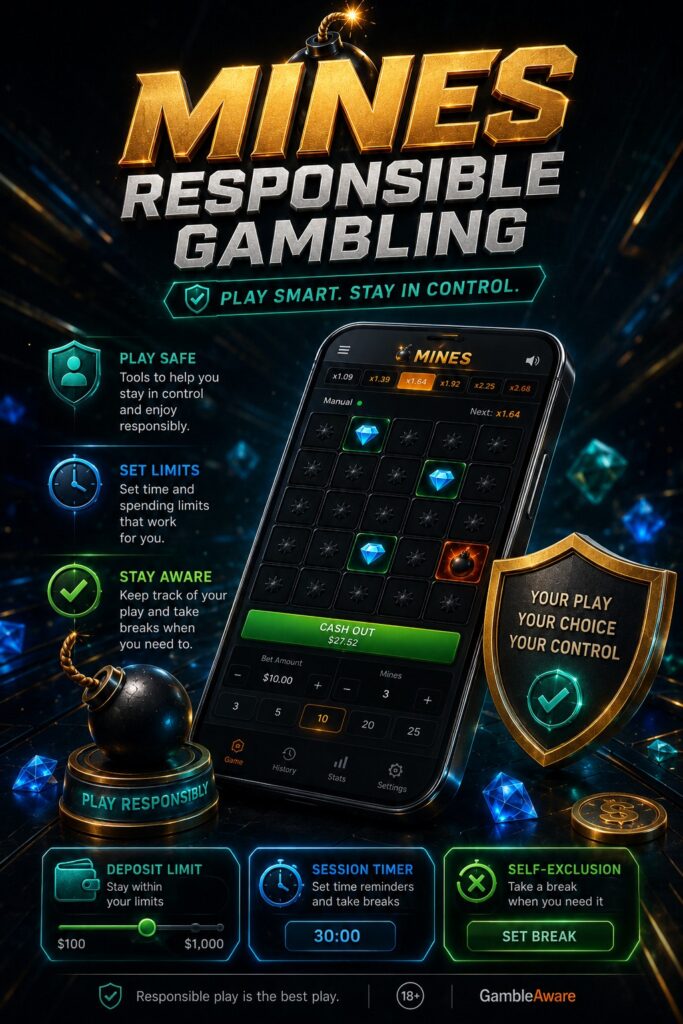
- A session without a pre-set limit is a session where the stop point gets decided by emotion, not by planning. The limit should be set before the first click, when the mind is clear and the balance is untouched.
- Two limits matter. A money limit: the maximum amount that can be lost in the session without affecting rent, food, bills, or savings. A time limit: the maximum duration before closing the game regardless of the balance.
- Both limits should feel comfortable before the session starts. If the money limit feels tight, the amount is too high. If the time limit feels too short to enjoy, the session frequency might be too high.
- Most platforms offer built-in tools for this. Deposit caps. Session timers. Loss limits. Configuring these before the first round removes the need for willpower mid-session, which is exactly when willpower is least reliable.
Time Management Tools
Phone screen time settings can cap how long a browser or app stays open. Alarm apps provide hard reminders. Some browsers support site-blocking extensions that cut off access after a set period.
None of these tools are complicated. Setting a 30-minute timer before opening the game takes five seconds. That timer firing mid-session is the nudge that a focused player otherwise misses. Time distortion during gambling sessions is well-documented. Thirty minutes can feel like ten. An external clock corrects for that.
Warning Signs of Gambling Harm
Problems don’t arrive all at once. They accumulate through repeating patterns.
Chasing losses. A round ends badly. The immediate impulse is to play another round to recover. Then another. The balance drops further. The impulse gets stronger. This cycle is the single most common path from casual play to financial harm.
Secrecy. Playing without telling anyone. Deleting transaction histories. Minimizing the screen when someone walks by. A hobby that needs hiding is no longer just a hobby.
Borrowed money. Using credit cards, loans, money set aside for rent, or funds borrowed from family to gamble. Once gambling is funded by debt, the math becomes almost impossible to recover from.
Sleep and mood changes. Staying up late to play. Irritability when not playing. Difficulty concentrating on work or conversations. These are indirect signs, but they show up reliably when gambling has shifted from entertainment to compulsion.
Neglecting responsibilities. Missing deadlines. Skipping meals. Cancelling plans. When game sessions start displacing the structures of daily life, the balance has tipped.
Financial Safety Rules
Money used for gambling should come from a separate, limited fund. Not from rent. Not from groceries. Not from loan repayments. Not from education savings. Not from family household budgets.
UPI makes transfers instant and frictionless. That convenience is also a risk. A deposit that takes two seconds to execute cannot be undone once processed. Credit cards add the additional danger of spending money that doesn’t yet exist.
A practical rule: if the deposit amount would cause stress to lose entirely, it’s too much. Every bet placed in Mines should be money the player has genuinely accepted as spent. Not frozen. Not invested. Spent.

Take a Break and Seek Help
When a session stops feeling like entertainment and starts feeling like obligation, the right move is to stop. Log out. Put the phone down. Step away from the screen. Drink water. Walk outside. Talk to someone about something unrelated to gambling.
These are not dramatic interventions. They’re resets. The game will still be there tomorrow. The balance will still exist. Nothing about Mines requires immediate continuation. The urgency is manufactured by the emotional state, not by the game mechanics.
If the pattern repeats — stopping feels hard, breaks don’t last, sessions resume within minutes of deciding to quit — that’s the point where professional help makes sense.
Support Resources in India
Free and confidential support exists for gambling-related harm and emotional distress. India has verified helpline directories that connect callers to trained counsellors. These services are available by phone and online.
Searching for “gambling addiction helpline India” or “mental health helpline India” returns current, verified resources. NIMHANS (National Institute of Mental Health and Neuro-Sciences) operates a toll-free helpline. iCall provides counselling services. Vandrevala Foundation offers 24/7 mental health support.
Reaching out earlier is better than reaching out later. The patterns that lead to serious financial and emotional harm are easier to interrupt when they’re weeks old, not months old.